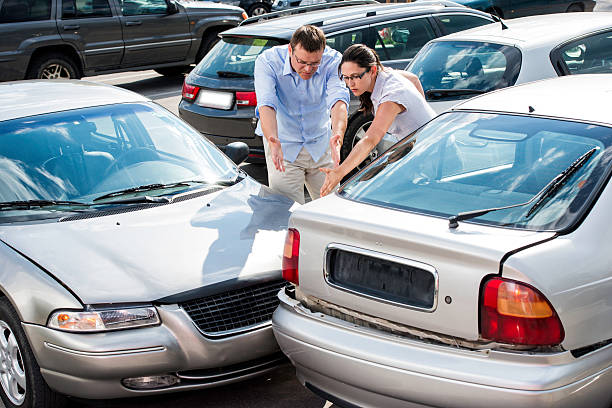

Parking Lots Are Where Surprisingly Many Accidents Happen
Parking lots seem low-stakes — slow speeds, close quarters. But the NHTSA estimates about 20% of all vehicle accidents occur in parking lots. Without clearly marked right-of-way rules (no traffic signals, different lane configurations), liability disputes are common and sometimes genuinely unclear.
Knowing the general rules of parking lot right-of-way, and what to do at the scene, can protect your claim and prevent costly mistakes.
Parking Lot Right-of-Way Rules
Thoroughfare lanes (the main lanes running through the lot connecting to entrances and exits) have right-of-way over feeder lanes (the smaller lanes running between parking rows). Vehicles in feeder lanes must yield to thoroughfare traffic.
When two vehicles are both in feeder lanes and approach an intersection, normal intersection rules apply — typically the vehicle on the right has right-of-way (in the U.S.) or whoever arrived first. Vehicles backing out of parking spaces must yield to all traffic in the lane.
Fault Is Often Shared in Parking Lot Accidents
Unlike highway accidents where one driver is typically clearly at fault, parking lot accidents frequently involve shared fault. A driver backing out may be primarily at fault, but if the other driver was speeding through the lot, both contribute.
Comparative fault is applied in most states — your recovery is reduced by your percentage of fault. In a 70/30 fault split on a $10,000 claim, the 30% at-fault party recovers $7,000, not $10,000. Both parties’ insurers will assess fault, and their assessments may differ initially.
What to Do at the Scene
Don’t leave the scene — even a minor parking lot accident where you scratch another car is a hit-and-run if you leave without leaving contact information. Photograph all damage, all vehicles’ positions, the surrounding area (to establish the lane configuration), and any surveillance cameras whose footage might capture the incident.
Exchange insurance information and driver’s license information, even if the damage looks minor. Adrenaline and lighting can make damage look smaller than it is. Report the accident to your insurer promptly.
Hit-and-Run in a Parking Lot
If you return to your car and find new damage with no note left, you’re dealing with a hit-and-run. Check for surveillance cameras on nearby buildings or the lot itself — many lots have security cameras. Ask nearby businesses if they have footage from the relevant time.
File a police report even if the responsible party isn’t identified. This creates a record that supports your uninsured motorist property damage (UMPD) claim with your own insurance, which covers damage from hit-and-run incidents under some policies.